
Pool Redox Potential Explained
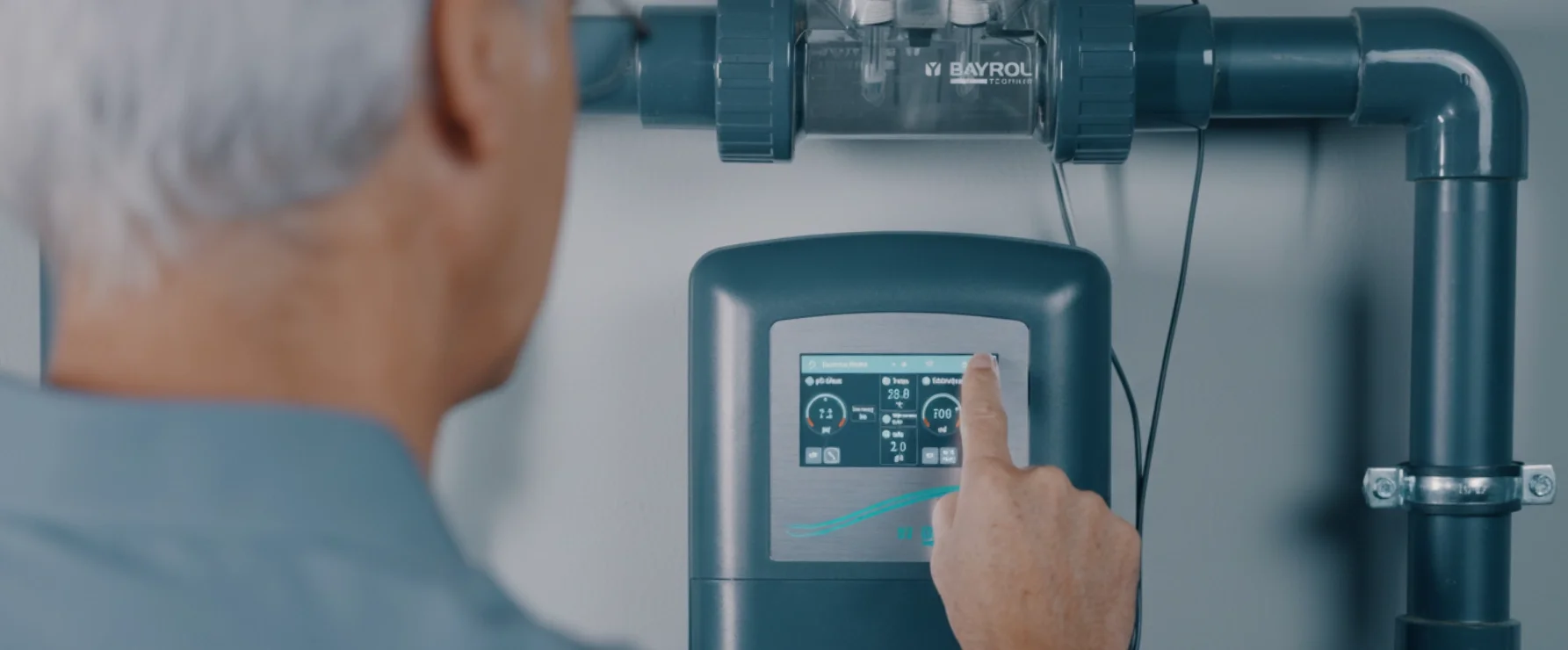
Redox doesn't measure Free Chlorine directly. There isn't really a simple way of converting it from a Redox value to Free Chlorine value either.
What Redox measures is the "Oxidative Power" of the pool water, which is why some companies call it ORP (Oxidation-Reduction Potential). Chemicals like Chlorine, Bromine etc Oxidise pollutants, that's the disinfection process.
For this purpose there are basically two types of things in Pool Water. Oxidisers (Chlorine-based Acids, Bromine-based Acids, Ozone and Hydrogen Peroxide) which increase the Redox value (mV) and Reducers (Chloramines, oils, urea, sweat, germs, bacteria, algae etc).
When you first set up a Redox controlled pool what you should do is bring the pool to your desired pH as Redox value is dependent on pH. It is useful to have a good level of Total Alkalinity as buffers pH to make changes less extreme. Then you add chlorine until it is at the desired level of Free Chlorine (checked with a DPD1 test).
Once these things are set and level throughout your pool system, you read the Redox value on your pool controller and enter this as your Redox Setpoint. Ideally check this Redox value when the pool cover is open and the weather is sunny (if applicable). The controller will keep the Redox value close to this setpoint and by that maintain the desired level of Free Chlorine. The way this works because with the pool chemistry the only thing changing in this pool is people getting in and out and when a person gets in the pool they are "adding" Reducers mentioned above reducing the Redox value (mV) and the Oxidiser (Chlorine), which increases Redox, is also getting used up and creating Chloramines which is another reducer. So, the controller then adds more Oxidiser (Chlorine) to bring the Redox value back up. This will maintain an approximate level of Chlorine around the value you chose at the start.
All measurement systems (Amperometric and pH) in Pools can be affected electrical potential in the water and the sample water system and controller should be earthed. This can be quite noticeable on Redox systems so the water systems should be earthed on an installation to prevent the possibility of anomalous readings.
This works as long as parameters of the pool remain constant. Rainwater doesn't really affect Redox, rain is mildly Acid so has some minor pH- qualities but nothing significant and the only other thing rain add to pools are biological Reducers which can bring Redox down slightly but are then counteracted by dosing a bit of Chlorine.
Top up tanks if anything are more likely to affect Redox as they can be a source for low level Electrical Potential if not separated from the pool properly.
So this maintains an approximate level of Free Chlorine at you setpoint, while also measuring the disinfection potential of your pool. This is also the reason why these systems don't work for Commercial Sites because they usually require Free Chlorine readings and the higher bather load makes the approximation not suitable. However, on Domestic sites this absolutely fine.